


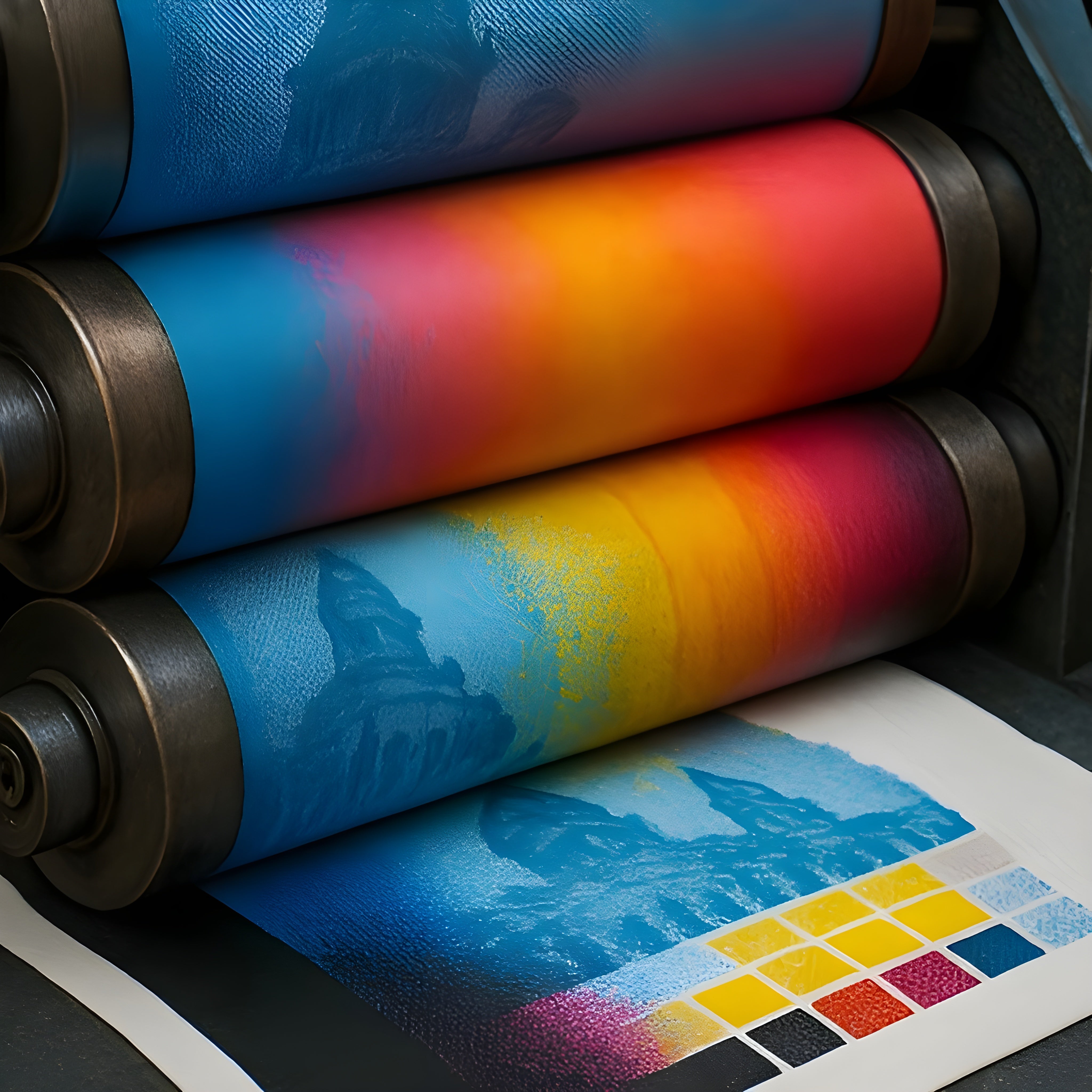
Pros and Cons of Offset Printing: A Simple Breakdown
Offset printing is a classic method that’s been around for ages, and it still has its place. While Printroom specializes in digital printing, understanding offset can help you see why we choose digital for most jobs. Here’s a quick look at its pros and cons.
Let’s start with the pros. Offset printing excels at big jobs—like thousands of flyers or books. The more you print, the cheaper each piece gets, making it a budget-friendly choice for bulk orders. It also delivers top-notch quality, with crisp details and consistent colors, even for tricky shades like metallics or pastels. If you need something massive, like a giant poster, offset can handle it with precision, thanks to its ability to work with large sheets and special inks.
Now, the cons. Offset takes time and effort to set up. Before printing starts, metal plates need to be made for each design, so it’s not great for quick turnarounds or small batches. It’s also inflexible—once those plates are done, you can’t tweak the design mid-run. That means no last-minute changes or personalization. Plus, the upfront costs for setup make it pricey for just a few copies, like 50 business cards.
At Printroom, we lean toward digital printing for its speed and versatility, but offset has its strengths for huge, uniform projects. Curious about what’s best for your idea? Contact Printroom via WhatsApp or email, and we’ll guide you through your options!